Selecting the best industrial valve is one of the ways of ensuring safety, efficiency, and effectiveness of your fluid flow systems. In terms of valve types used for industrial applications, there are forged ball valves and forged gate valves. While both types of valves are popular in industries, they have different structures and uses.
It is good to know the differences between these valves in order to pick the most appropriate one for the industry you represent. Being a forged ball valve manufacturer company, Metflow Engineers designs valves for demanding industrial applications.
Forged Ball Valve Definition
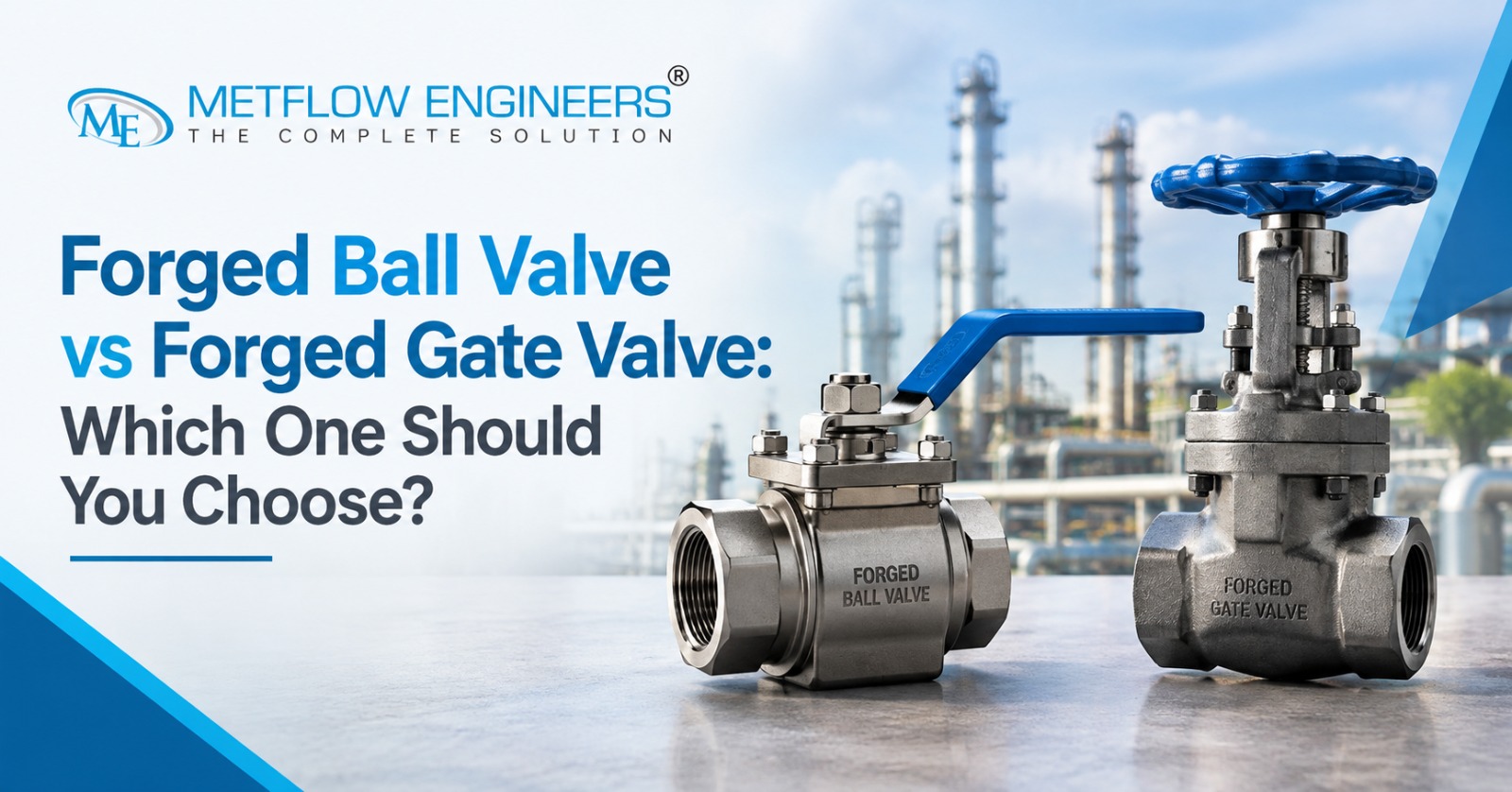
The forging method is used to produce the body of the forged ball valve. This type of valve has a spherical ball that has a hole passing through it. When the ball is turned to the position where the hole aligns with the flow pipe, fluid passes through. The ball is rotated by 90 degrees in order to close the valve.
Another benefit of a forged ball valve is its fast response due to the quarter turn mechanism. Additionally, there is a low pressure drop when a valve is completely open. The compact design can become very handy in case of tight installation space.
What Is a Forged Gate Valve?
The forging gate valve controls the flow using the moving gate or wedge. It opens or closes the fluid passage depending on the vertical movement of the gate within the multi-turn hand wheel or actuator. The completely open position moves the gate far from the fluid flow.
The forged gate valves are usually used for isolation purposes without any need to regulate the fluid flow. They are often used in the pipeline and industrial systems, where the valve stays opened or closed for long time periods. Choosing a reliable forged gate valve manufacturer is very important in this case.
Forged Ball Valve vs Forged Gate Valve
Even though both types of the valves allow the efficient flow isolation, there are some differences between their operating principles.
|
Feature |
Forged Ball Valve |
Forged Gate Valve |
|
Mode of Operation |
Quarter turn |
Multi-turn |
|
Main Purpose |
Rapid shut-off and isolation |
Flow isolation |
|
Speed of Operation |
Fast |
Moderate |
|
Flow Passage |
Minimum restriction when open |
Total flow when fully open |
|
Mounting Requirements |
Compact |
Takes up vertical space |
|
Frequent Operation |
Preferred |
Unpreferred |
|
Application |
For quick isolation and process applications |
For pipelines and isolation purposes |
In some cases, a forged ball valve may prove to be more favorable than a forged gate valve since it operates at a faster speed and is more frequently used. On the other hand, a forged gate valve will be preferred for an application where total flow and isolation of a pipeline for a longer duration is important.
What Valve Should You Go For?
It all depends on the operating conditions of the system. A forged ball valve may be chosen in case rapid opening and closing is important.
A forged gate valve may be recommended if the valve is meant only for isolation, while minimum flow restriction is desirable if the valve is fully opened. Before deciding on any valve, industries must consider the pressure rating, temperature, characteristics of the fluids flowing through, pipe diameter, frequency of use, and the available space for installation.
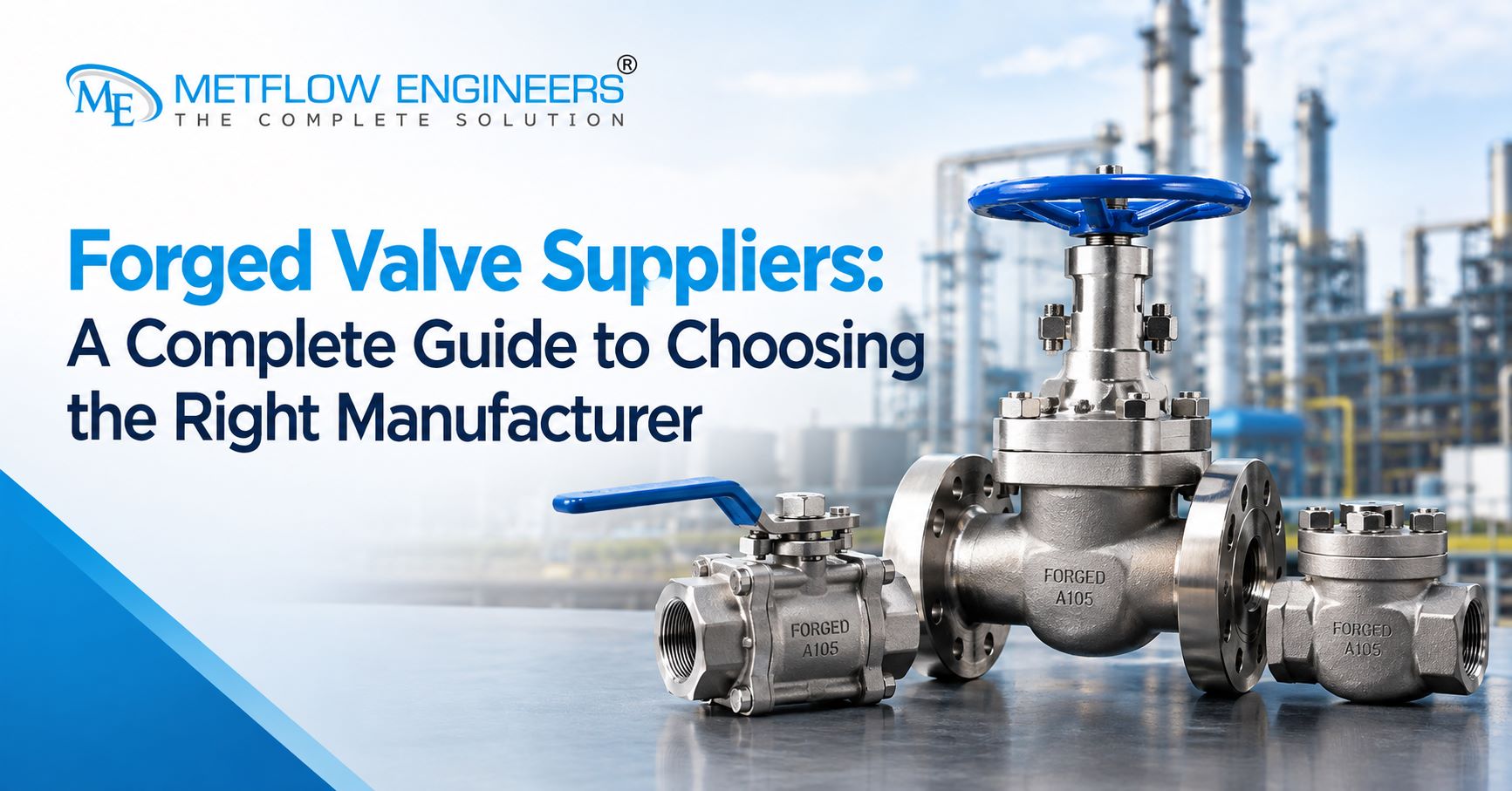
For selecting a proper valve for your systems, industries can also consult experts from Forged Steel Valve Manufacturers in India.
Material Choice and Industries Using Them
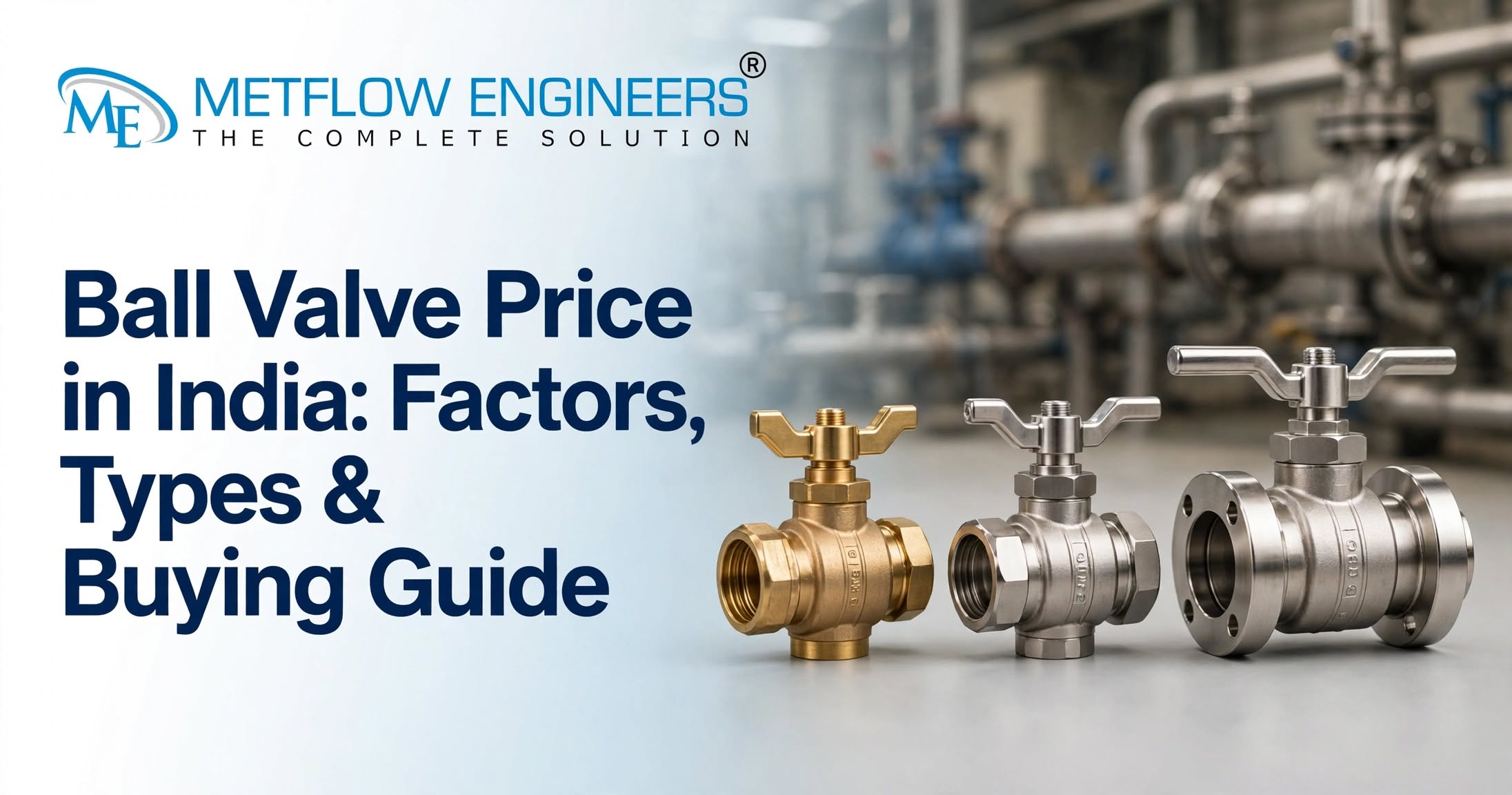
There are various kinds of materials used for forging valves, depending on different operational conditions. Forged steel valves are popular in situations that demand high performance and are suitable for tough operating conditions. Brass is also one such material, and there are many Forged Brass Ball Valve Manufacturers providing valves suitable for systems needing brass valves.
Steel and brass forged ball and gate valves may be applied in industries such as oil & gas, petrochemicals, chemicals, power generation, and pipelines. It is important to choose the right valve material and construction depending on the pressure, temperature, and media.
Why Metflow Engineers?
Metflow Engineers focuses on providing reliable valve products for industrial applications. The attention to the valve design, material and applications enables the company to provide support for the industries that need durable valves.
Working with the experienced forged ball valve manufacturer will enable companies to choose the valves that suit the operational requirements without jeopardizing their reliability.
Conclusion
Forged ball and gate valves are crucial for the industrial flow systems. However, these valves have different functions. The forged ball valves are perfect for rapid shut off and small valves while the gate valves are intended for pipeline isolation and full flow capacity.
The proper type of valve depends on the operating pressure, temperatures, media, operation frequency and installation requirements. Metflow Engineers offers the assistance in selecting valves that meet your specific application needs.
Frequently Asked Questions
1. What is the difference between a forged ball valve and a forged gate valve?
The forged ball valve makes use of the rotating ball and has the function that involves quarter-turn movement whereas the forged gate valve uses a gate which moves vertically.
2. When should you use a forged ball valve?
You can use a forged ball valve in case you want a quick shut off mechanism and compactness of the forged ball valve along with easy operation.
3. Can I use forged steel valves in high-pressure systems?
Forged valves made of steel are commonly used in the industries because they have to withstand high pressure and temperature environments.
4. How do I choose the right forged valve manufacturing company in India?
Choose them based on their products, raw materials, manufacturing process, and their ability to manufacture valves suitable for your requirements of pressure and temperature among others.